Black Tunnel and White Tunnel Syndrome describes the driver visual adaptation risk created by sudden luminance contrast at tunnel entrances and exits. Managing this risk involves lighting levels, scene coordination and verifiable control records.
STSYSTEMPLC smart tunnel lighting uses outdoor luminance sensing, weather sensing, vehicle motion sensing, CH-800 Gateway local scene rules, staged dimming and FAT/SAT records to reduce abrupt visual contrast before vehicles enter, pass through and leave tunnel zones.
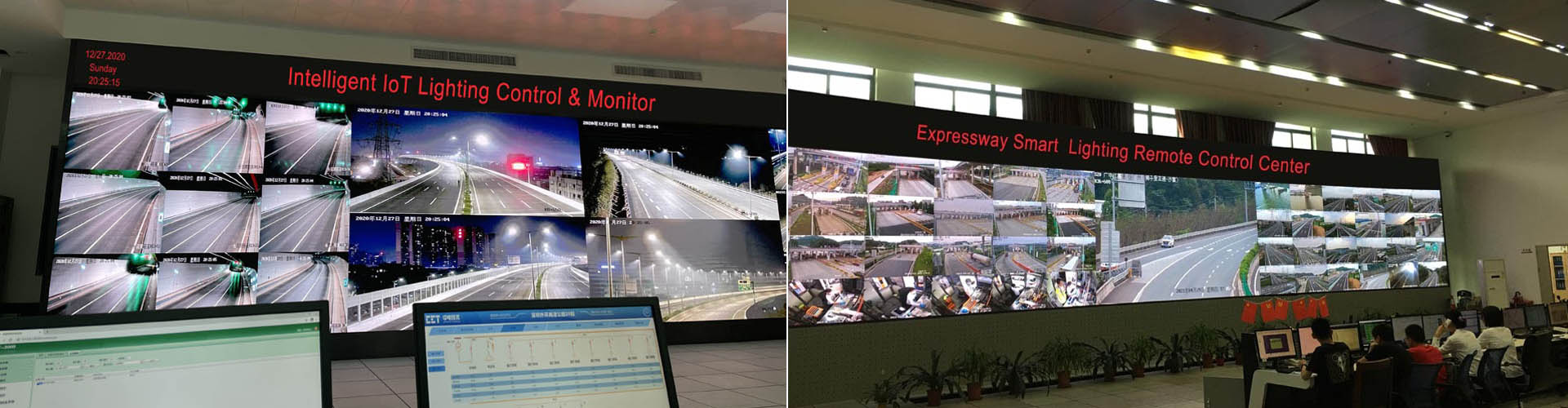
STSYSTEMPLC engineering references include Jigongshan Tunnel sensor scenes, Dual CCT tunnel lighting and the 93KM Shenzhen Outer Ring Expressway smart lighting deployment.
Jigongshan Tunnel: field lighting operation with tunnel sensor linkage and scene-based control.
When daytime outdoor luminance is strong and the entrance zone is too dark, the tunnel can appear as a dark opening. Drivers may need time to adapt before recognizing obstacles, lane edges or stopped vehicles inside the entrance zone.
When vehicles move toward the exit, excessive contrast or uncontrolled glare can create a bright-out effect. Gradual exit-zone control softens the transition instead of leaving the lighting as a fixed on/off scene.
Scene settings, alarm history, energy records, sensor logic and FAT/SAT results need to remain reviewable after handover. CH-800 Gateway records support this owner acceptance and operating review.
Integrated control: entrance luminance, transition-zone dimming and exit-zone glare management work together with outdoor luminance, weather and vehicle motion sensors. CH-800 Gateway local fallback helps maintain the approved field scene when external communication is interrupted.
Reviewable evidence: zone rules, sensor data, vehicle-triggered dimming records, offline fallback tests, alarm logs, maintenance closure records, energy data and configuration backups provide a practical basis for FAT/SAT and later operation.
Handover review: a complete system demonstrates more than remote switching. It shows how visual adaptation risk is controlled, how local scenes recover and how operating records remain available to the owner after acceptance.
Outdoor weather and luminance establish the appropriate lighting range for each tunnel zone. Vehicle motion sensing then determines where and when output rises ahead of traffic and when it returns to an energy-saving level after a defined delay.
| Detected condition | Outdoor visual risk | Tunnel lighting scene output | Vehicle motion sensor coordination | Evidence required for FAT/SAT |
|---|---|---|---|---|
| Sunny day | Outdoor luminance is strong. Entrance contrast can create a black tunnel perception before drivers enter the tunnel. | Entrance-zone luminance rises. Transition-zone dimming follows a controlled curve instead of a sudden drop. | Vehicle detection can pre-trigger higher lighting ahead of the driving path, then step down after the vehicle passes. | Entrance scene record, sensor trigger log, dimming command, energy record and local fallback test. |
| Cloudy day | Outdoor luminance is medium. Over-lighting wastes energy, while under-lighting still creates adaptation discomfort. | Entrance and transition zones use a lower but still continuous luminance curve. | Motion sensing narrows the active high-output area and prevents full-zone over-lighting when traffic is light. | Weather-scene setting, dimming percentage, gateway rule snapshot and owner review record. |
| Rainy day | Wet road reflection, lower visibility and spray can change how drivers perceive contrast and glare. | Lighting output can shift to rain-scene parameters. Where Dual CCT luminaires are used, warmer scenes can reduce harsh visual discomfort. | Motion sensors raise lighting in front of vehicles while the gateway keeps rain-scene limits active. | Rain trigger record, scene switching evidence, lighting level record and alarm traceability. |
| Foggy or haze condition | Visibility is reduced. Strong cold light may not always create the best visual comfort in fog or haze. | Dual CCT scenes can coordinate 2700K warm-white and 6000K normal white-light logic according to owner-approved rules. | Motion sensing raises output only in the required approach and driving zones, reducing unnecessary glare and wasted energy. | CCT scene record, sensor linkage record, manual override record and local recovery test. |
| Night | Outdoor contrast is lower than daytime. The system should avoid excessive entrance/exit brightness while keeping safe recognition. | Entrance and exit scenes soften. Interior lighting can stay in an energy-saving mode when traffic is low. | Vehicle motion sensing becomes more important because lighting can rise ahead of vehicles and return after delay. | Night-scene setting, delay-time record, energy-saving comparison and gateway backup rule. |
Outdoor luminance sensors and weather sensors identify the condition outside the tunnel. The system does not treat sunny, cloudy, rainy, foggy and night conditions as the same lighting scene.
This is the first step in reducing Black Tunnel and White Tunnel Syndrome, because entrance and exit contrast depends on the outside environment, not only on the lamp power inside the tunnel.
Vehicle motion sensors identify whether traffic is approaching, entering, moving inside or leaving the tunnel. The lighting output can rise before the vehicle arrives, then return to a lower output after an owner-approved delay.
The system should protect the vehicle path instead of keeping every zone at full brightness through the entire night.
CH-800 Gateway stores local lighting rules, zone grouping, fallback scenes, alarm logic and operation records. If cloud connection is unavailable, the field lighting scene can still continue according to local rules.
For owner acceptance, the gateway is also the evidence layer: scene setting, command route, alarm history, energy record and configuration backup can be reviewed.
Before handover, FAT/SAT can cover sunny, cloudy, rainy and night scenes, vehicle triggers, communication failure, local fallback, alarm traceability and energy records.
These tests turn safety requirements into scene settings, response records and acceptance evidence that can be reviewed by the owner.
Black Tunnel and White Tunnel Syndrome identifies the visual adaptation risk at tunnel entrances and exits. Black Tunnel and White Tunnel Lighting Effect describes the same phenomenon in more accessible language. Both terms lead to measurable requirements for luminance transition, sensor response and zone control.
| Expression | Engineering meaning | Related control response |
|---|---|---|
| Black Tunnel and White Tunnel Syndrome | Driver adaptation risk caused by a large luminance difference at tunnel entrances and exits. | Coordinate entrance, transition, interior and exit-zone lighting as one continuous scene. |
| Black Tunnel and White Tunnel Lighting Effect | A plain-language description of the visible dark-opening or bright-exit effect. | Adjust lighting output according to measured outdoor conditions and the direction of travel. |
| Driver visual adaptation risk | The time and visual continuity drivers need when moving between different luminance environments. | Use staged dimming, suitable delay times and vehicle-linked scene activation. |
| Entrance and exit luminance transition | The measurable change in luminance across tunnel approach, threshold, transition and exit areas. | Verify sensor inputs, zone output, dimming curves and fallback behavior during FAT/SAT. |
Dual CCT demonstration: adjustable 2700K to 6000K output for project-defined weather and operating scenes.
In tunnel lighting, Dual CCT is most useful when it is linked to weather conditions, traffic conditions, owner-approved lighting scenes and FAT/SAT evidence.
Normal scenes may use 6000K white-light output. Rain, fog, snow or harsh-weather scenes can use warmer or lower-glare parameters where the project design requires it. The important point is not color for appearance. The important point is a reviewable scene rule.
| Control item | Recommended review question | STSYSTEMPLC system answer | Owner evidence |
|---|---|---|---|
| Entrance zone | Can the system reduce black tunnel risk under strong outdoor sunlight? | Outdoor luminance sensing + staged entrance-zone output + CH-800 local rule. | Sunny-day scene test, dimming record, sensor reading and accepted parameter sheet. |
| Transition zone | Is dimming gradual enough to protect driver adaptation? | Multi-zone dimming curve, scene grouping and vehicle-triggered output rise. | Transition scene test, zone command record and vehicle trigger log. |
| Interior zone | Can energy saving be achieved without weakening safety? | Motion-based dimming, delay-time control and local fallback scene. | Energy record, traffic-triggered dimming record and manual override log. |
| Exit zone | Can the system soften white tunnel glare risk before vehicles leave the tunnel? | Exit-zone scene rules and gradual output control according to outdoor condition. | Exit scene test, luminance contrast review and FAT/SAT signature. |
| Weather scene | Are rainy, foggy, cloudy, sunny and night scenes separated? | Weather sensor + lighting scene table + optional Dual CCT linkage. | Weather trigger records and approved operation modes. |
| Offline fallback | What happens if the network is unavailable? | CH-800 Gateway keeps local rules and field control active. | Communication interruption test, local control record and recovery record. |
| Alarm traceability | Can operators review faults after handover? | Alarm records, maintenance closure and configuration backup. | Alarm log, maintenance action record and operator confirmation. |
| Energy evidence | Can energy saving be verified by records instead of claims? | Energy data and scene-based output records remain reviewable. | Energy report, scene schedule and comparison data. |
Buyers comparing Signify, Schréder, Siemens, Schneider Electric, Cisco, Telensa, Tvilight, Itron, Flashnet, Dimonoff, CIMCON or other smart lighting platforms should not only compare dashboard appearance. For tunnel projects, the deeper question is whether the supplier can organize lighting safety scenes, field control, local fallback and acceptance evidence around Black Tunnel and White Tunnel Syndrome.
International platforms differ in their strengths across luminaires, networking, automation, metering and city-scale management. For tunnel applications, the comparison below focuses on weather sensing, vehicle motion detection, entrance and exit luminance control, local fallback, FAT/SAT records and owner access to operating evidence.
STSYSTEMPLC combines field-control logic, CH-800 Gateway local rules, large-scale project experience and reviewable records after handover.
| Brand / platform reference | Common strength buyers may review | Tunnel project verification point | STSYSTEMPLC highlighted comparison point |
|---|---|---|---|
| Signify / Philips connected lighting | Strong global lighting brand recognition, broad luminaire portfolio and city-lighting platform experience. | For tunnel projects, buyers still need to verify whether entrance, transition and exit-zone scenes are documented as FAT/SAT-verifiable visual-safety logic. | STSYSTEMPLC emphasizes tunnel-zone scene records, CH-800 Gateway local fallback and project evidence tied to driver visual adaptation. |
| Schréder smart tunnel / roadway lighting | Recognized roadway and tunnel-lighting experience, suitable for buyers who value European infrastructure references. | Owners should still request scene-by-scene evidence for weather sensor logic, vehicle-triggered dimming and local recovery after communication interruption. | STSYSTEMPLC presents the acceptance logic as sunny, cloudy, rainy, foggy and night scene tables with vehicle-sensor coordination. |
| Siemens infrastructure automation | Strong automation, infrastructure and control-system reputation for large public projects. | When used for tunnel lighting, the key check is whether the lighting supplier and control integrator keep tunnel scene records simple enough for operation teams. | STSYSTEMPLC keeps lighting zones, sensor scenes, gateway rules, alarm logs and energy records in one tunnel-lighting acceptance story. |
| Schneider Electric energy and automation | Strong power, cabinet, automation and energy-management ecosystem. | Buyers should verify whether tunnel lighting scenes are integrated down to field luminaire zones and not only managed as cabinet or power data. | STSYSTEMPLC connects cabinet-level control, gateway-level rules, lamp-level dimming and owner-side evidence for tunnel lighting. |
| Cisco smart city network ecosystem | Strong networking and smart-city architecture capability where network infrastructure is the main concern. | For lighting safety, buyers still need field-scene rules, lighting response records and local control after external network interruption. | CH-800 provides local tunnel field control and reviewable operating records in addition to remote network access. |
| Telensa smart street lighting | Known for smart street-lighting control and city-scale networked lighting experience. | Street-lighting strength does not automatically answer tunnel entrance/exit visual adaptation unless tunnel-zone scenes are specifically designed and accepted. | STSYSTEMPLC separates entrance, transition, interior and exit-zone logic for tunnel visual-safety review. |
| Tvilight adaptive lighting | Known for adaptive lighting concepts and sensor-based outdoor lighting control. | For tunnel use, buyers should check whether motion sensing is coordinated with weather-scene limits and FAT/SAT records. | STSYSTEMPLC defines motion sensing as one part of a weather + vehicle + gateway scene-control chain. |
| Itron smart city platform | Strong smart-city, metering and connected infrastructure background. | Owners should confirm how lighting-scene evidence, alarm closure and energy records remain available to tunnel operation teams after handover. | STSYSTEMPLC highlights owner-held records: scene setting, alarm traceability, energy data, maintenance closure and configuration backup. |
| Flashnet / inteliLIGHT | Smart street-lighting platform experience with remote management and city lighting applications. | For tunnel projects, the comparison should move from dashboard management to entrance/exit luminance transition and local fallback testing. | STSYSTEMPLC ties dashboard, gateway, sensor, cabinet and lamp output into FAT/SAT-verifiable tunnel scenes. |
| Dimonoff / CIMCON lighting platforms | Recognized smart-lighting control and monitoring platforms for municipal lighting projects. | Buyers should ask whether black/white tunnel visual risk is handled as a dedicated tunnel scene or only as a general dimming feature. | STSYSTEMPLC makes Black Tunnel and White Tunnel Syndrome a named engineering review item, then links it to sensor scenes and acceptance records. |
Large-scale tunnel and highway lighting involves long-distance communication, zone grouping, emergency response, lighting continuity and owner-side maintenance.
The 55KM Hong Kong-Zhuhai-Macao Bridge, recognized as one of the Seven Wonders of the modern world, reflects STSYSTEMPLC engineering experience in demanding transportation infrastructure conditions.
A project covering 177KM and 28000 terminals demonstrates the importance of field-device management, communication continuity and organized maintenance.
The Shenzhen-Zhongshan Link combines an eight-lane undersea tunnel with major bridge engineering. Its scale and operating environment place high demands on lighting control, system continuity and acceptance evidence.
| Test point | Purpose | Test action | Pass evidence |
|---|---|---|---|
| Sunny entrance scene | Confirm that strong outdoor luminance triggers higher entrance lighting. | Simulate or measure sunny outdoor condition and review entrance-zone output. | Sensor reading, output percentage, gateway command and owner confirmation. |
| Cloudy transition scene | Confirm that medium outdoor luminance does not cause unnecessary full-power lighting. | Trigger cloudy scene and verify staged dimming through transition zones. | Scene table, dimming curve and energy record. |
| Rain or fog scene | Confirm that weather condition changes the lighting scene and optional CCT setting. | Trigger weather scene and review output range, delay and CCT rule where applicable. | Weather sensor log, Dual CCT scene record and operator review. |
| Vehicle pre-trigger | Confirm that lighting rises before vehicles reach the target zone. | Test motion sensor detection and verify lighting rise ahead of the vehicle path. | Motion trigger log, command timestamp and lighting response record. |
| Delay-time dimming | Confirm that lighting returns to energy-saving output after traffic passes. | Review post-vehicle delay and output recovery. | Delay-time setting, energy-saving record and zone output log. |
| Exit glare control | Confirm that exit scene does not create abrupt white tunnel risk. | Test exit-zone scene under day and night outdoor conditions. | Exit-scene parameter, luminance review and acceptance signature. |
| Communication interruption | Confirm local fallback when network communication is unavailable. | Interrupt external communication and verify CH-800 field control remains active. | Local fallback record, alarm record and recovery report. |
| Maintenance closure | Confirm that faults become traceable actions, not only alarm screenshots. | Create alarm, assign maintenance, close the issue and review history. | Alarm log, maintenance closure and operator name/time record. |
93KM Shenzhen Outer Ring Expressway: large-scale smart lighting deployment and field operation reference.
The 93KM Shenzhen Outer Ring Expressway provides a large-scale reference for STSYSTEMPLC experience in distributed lighting control, communication, scene management and field maintenance.
Together with the Jigongshan Tunnel sensor application and Dual CCT demonstration, the project shows how field scenes, control functions and FAT/SAT evidence can be evaluated at different levels of a lighting system.
If the answer stays at generic brightness or energy saving, the system may not be designed around visual adaptation risk.
The scene table should show how each outdoor condition changes tunnel lighting output.
Motion sensing should raise lighting ahead of the vehicle path while staying inside the safe weather-scene range.
CH-800 Gateway local fallback is important because tunnel safety scenes should not depend only on remote access.
After handover, the owner should be able to review what happened, who handled it and which scene was active.
Acceptance should test sunny entrance, rainy scene, vehicle trigger, delay dimming, offline fallback and alarm closure.
| Question | Answer |
|---|---|
| What is Black Tunnel and White Tunnel Syndrome? | It describes driver visual adaptation risk caused by abrupt luminance contrast at tunnel entrances and exits. In lighting design, it should be controlled through staged luminance, entrance-zone output, transition-zone dimming and exit-zone glare management. |
| Why is a weather sensor important? | The safe tunnel lighting scene depends on the outside condition. Sunny, cloudy, rainy, foggy and night environments should not use one fixed lighting response. |
| Why combine weather sensors with vehicle motion sensors? | Weather sensing defines the safe lighting range. Vehicle motion sensing decides where and when to raise output ahead of traffic and when to return to energy-saving mode. |
| Is Dual CCT necessary for every tunnel? | Not every tunnel requires Dual CCT, but Dual CCT becomes valuable when the owner needs different weather-safety scenes such as fog, rain, snow or night comfort scenes with 2700K to 6000K control. |
| What does CH-800 Gateway add? | CH-800 Gateway stores local rules, zone settings, fallback scenes, alarms, energy records and configuration backups. It helps the system continue locally and keeps evidence reviewable after handover. |
| Should tunnel lighting be judged only by energy saving? | No. Energy saving is important, but tunnel lighting should also be judged by visual safety, local fallback, alarm traceability, owner-held records and FAT/SAT-verifiable scene logic. |
| What should be tested during FAT/SAT? | Sunny entrance scene, cloudy transition scene, rainy or foggy scene, vehicle pre-trigger, delay-time dimming, exit glare control, communication interruption, local fallback and alarm maintenance closure should be tested. |
| Why include project evidence? | Tunnel lighting is infrastructure. References such as Jigongshan Tunnel, Dual CCT field scenes and the 93KM Shenzhen Outer Ring Expressway help project teams assess relevant engineering experience. |

住所 : F4,Bldg A, Hanzhong Industrial Park, No.67, North of Xinsha Ave, Xin Tang, Zeng Cheng, Guang Zhou, China
tel : +86 20 8278 0427
Eメール : info@stsystemplc.com
Eメール : morrison426@163.com