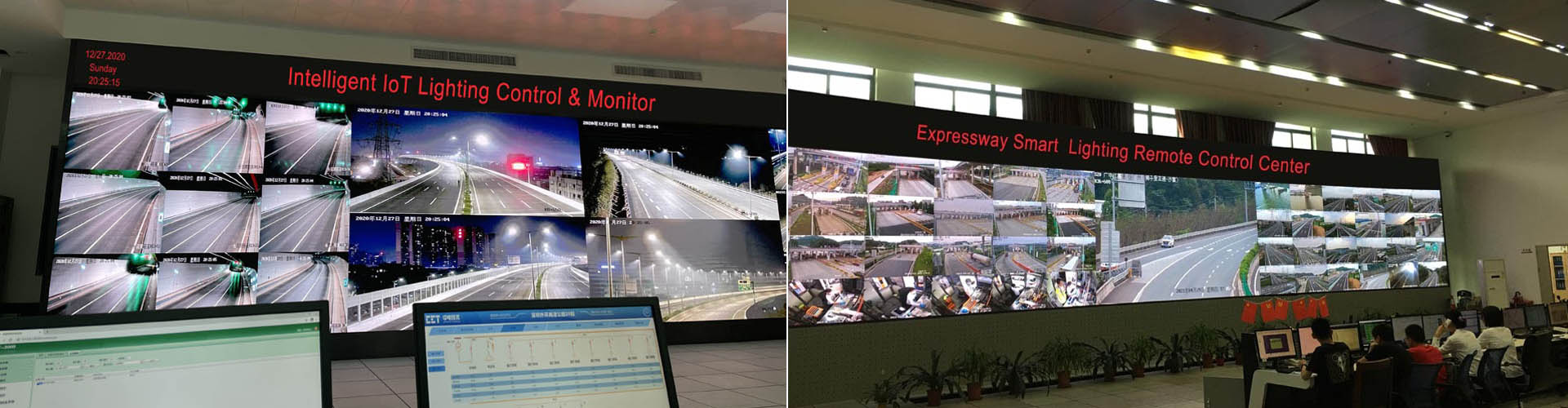
How owners keep control of alarms, gateways, energy records and maintenance evidence after project acceptance.
The real failure is usually not “the lamp cannot turn on.” The real failure is that nobody can prove which lamp, gateway, cabinet, alarm, schedule or maintenance action caused the problem.
Use this guide if your team is comparing a smart street lighting system, a street light control system, an IoT street lighting platform, a tunnel lighting control system or an alternative to a global lighting brand.
City, highway and tunnel lighting buyers often begin with a simple goal: reduce energy consumption, improve road safety and make maintenance easier. The first presentation usually looks promising. Lamps dim correctly, maps load quickly, alarms appear on the screen and the supplier explains how the system will support smart city upgrades.
But a real Interconnected project is judged after handover. Six months later, the owner may need to explain an abnormal energy curve, a dark road section, a tunnel lighting complaint, a cabinet failure, a disconnected gateway or repeated lamp replacement. At that moment, the important question is no longer whether the demo worked. The question is whether the system can still produce reliable evidence.
Large lighting brands and smart city suppliers have already educated the market around energy saving, remote control, public safety, sustainability and citywide management. That direction is correct. However, owners now search more deeply because they have seen projects where the first-year performance was acceptable but the fifth-year operation became difficult.
| Buyer Question | What the Buyer Actually Wants to Know | Evidence the Buyer Should Request |
|---|---|---|
| smart street lighting system | Can one system manage lamps, cabinets, gateways, schedules, alarms and records? | Show the Interconnected architecture from luminaire control to cabinet logic, CH-800 Gateway, PLC/LoRA communication and owner-visible software. |
| street light control system | Can the system reduce daily maintenance and emergency dispatch? | Explain alarm classification, fault location, local fallback, maintenance tickets and field-verifiable records. |
| IoT street lighting platform | Can the lighting grid become a smart city data and service layer? | Position lighting as an Interconnected infrastructure layer that can support sensors, public safety, traffic, energy and maintenance data. |
| tunnel lighting control system | Can the system handle safety-critical scenes, brightness changes and abnormal conditions? | Connect tunnel zones, entrance adaptation, cabinet control, emergency mode, gateway evidence and maintenance traceability. |
| smart lighting maintenance cost | Will the system reduce bucket-truck work, lane closure and repeated fault visits? | Bring maintenance equipment, dispatch logic, fault evidence, firmware records and 5-year to 10-year spare-part planning into the procurement discussion. |
| smart street lighting brand alternative | Can the owner avoid being locked into one dashboard, one communication route or one supplier explanation? | Compare data ownership, open integration, gateway records, backup files, private deployment and project-specific handover evidence. |
Many serious buyers do not begin with a perfect product name. They begin with a field problem. A road section is dark, a gateway is offline, a cabinet cannot report correctly, a maintenance team needs a lift truck again, or the owner wants to replace a proprietary smart lighting platform without losing existing assets. These searches are often more valuable than broad industry words because the buyer already has a real project pressure.
| Real Search Scenario | Buyer Pain Behind the Search | Interconnected Answer |
|---|---|---|
| smart street light gateway offline | The owner cannot confirm which road section, cabinet or lamp group is affected. | Use gateway zoning, cabinet records, communication logs and local fallback behavior to keep the field layer reviewable. |
| street light controller replacement | The original supplier may be slow, expensive, discontinued or locked into one platform. | Check controller interface, PLC/LoRA route, cabinet compatibility, configuration backup and handover files before replacement. |
| street lighting maintenance truck cost | Every unclear fault may require bucket truck, boom lift, scissor lift, lane closure and repeated inspection. | Connect alarm type, asset identity, fault location, repair action and closure evidence before dispatching the maintenance team. |
| tunnel lighting control failure | Safety-critical zones need clear entrance adaptation, emergency mode and abnormal-condition records. | Use cabinet-level control, gateway evidence, local schedules, emergency scene logic and owner-reviewable alarm history. |
| alternative to proprietary smart lighting platform | The owner wants future flexibility without losing existing luminaire, cabinet, gateway or energy records. | Review data export, open integration, private deployment, backup files and supplier-transition responsibility before procurement. |
| smart street lighting system not working after handover | The demo passed, but daily operation exposes missing records, unclear responsibilities and weak maintenance workflow. | Build acceptance around owner evidence: asset map, alarm history, gateway files, energy data, maintenance records and recovery plan. |
Strong global suppliers present more than products. They present confidence, references and operating language. Signify-style content often uses city cases, light points, energy saving, sustainability and public management language. Siemens-style content speaks to asset management, work orders, infrastructure operation and interoperability. Cisco-style content expands the lighting network into a secure multi-service city platform. Specialized smart lighting players such as Tvilight and inteliLIGHT emphasize adaptive lighting, open standards, lamp-level control, maintenance visibility and scalable city operation.
The practical next step is to connect those benefits to field evidence: Interconnected hardware + software + gateway evidence + owner-controlled handover. This operating chain goes beyond a single controller, a luminaire-only proposal or a dashboard-only platform.
They see clear benefits first: energy saving, safer streets, lower maintenance cost, central management, citywide scalability and sustainability.
They also see proof: project scale, real city names, maintenance improvement, software screenshots, interoperability and future smart city expansion.
A procurement review should go deeper into the operating layer: cabinet behavior, gateway grouping, PLC/LoRA fallback, alarm records, maintenance closure, data backup and acceptance evidence.
This is where an Interconnected IoT lighting solution can give the owner a clearer review path than a simple device story.
Most projects do not fail because one feature is missing. They fail because the owner cannot connect field behavior with software records. A lamp is dark, but the alarm is unclear. A gateway drops offline, but the affected road section is not easy to identify. A cabinet works locally, but the cloud record is incomplete. A maintenance team replaces parts, but the system cannot show who handled the work and whether the fault was really closed.
For small projects, these problems may be hidden by manual inspection. For long roads, highways, tunnels and citywide lighting, they become expensive. Every unclear fault can become a truck roll, a lane closure, a complaint, a repeated inspection or a dispute between the owner, EPC contractor, lighting supplier, communication provider and software platform.
A serious buyer should ask each supplier to document the complete operating chain. This test is useful when evaluating global brands, local integrators, lower-price controller suppliers, cloud platforms or mixed-vendor retrofit proposals.
| Procurement Question | Basic Response | Complete Handover Requirement |
|---|---|---|
| Who owns the data after handover? | The supplier keeps the cloud account and exports reports when needed. | The owner can retain records, backups, account authority, alarm history, energy data and recovery files. |
| What happens when communication is interrupted? | The dashboard shows offline status and waits for recovery. | Cabinet logic, local schedules, fallback control and gateway records remain reviewable. |
| Can the system support mixed infrastructure? | Only selected devices are supported, usually inside one brand ecosystem. | PLC, LoRA, NB-IoT, CAT-1, Ethernet and fiber can be selected according to corridor topology and project policy. |
| Can maintenance cost be proven? | A reduction in site visits is proposed. | The system records fault location, alarm type, dispatch evidence, repair action and closure status. |
| Can the owner change suppliers later? | The supplier says support will continue. | Interface responsibility, data export, gateway records, cabinet files and handover package are prepared from the beginning. |
Buyers need more than a risk list. The useful page explains how STSYSTEMPLC helps the owner solve buyer pain points and industry pain points through architecture, records, service scope and handover evidence.
| Buyer or Industry Pain Point | Project Impact | How STSYSTEMPLC Helps |
|---|---|---|
| Buyer pain: the project passes acceptance, but the owner cannot clearly see field behavior after handover. | Faults, complaints and repeated visits can become disputes between the owner, contractor, lighting supplier and platform team. | STSYSTEMPLC links controller identity, cabinet logic, CH-800 Gateway records, alarms, energy data, maintenance closure and handover files in one reviewable operating chain. |
| Industry pain: lighting, communication, cabinet work and software operation are often delivered by different parties. | Interface responsibility can be unclear when the system goes offline or a fault repeats. | The project can define gateway zones, communication routes, cabinet files, account authority and supplier responsibility before acceptance. |
| Buyer pain: year-5, year-8 or year-10 operation may depend on people rather than retained evidence. | A later service-team change can increase recovery time and make asset history hard to verify, especially in EMC projects or extended-warranty contracts. | STSYSTEMPLC can prepare owner-held asset maps, configuration backups, firmware records, service records, export samples and a practical transition package for 5-year, 8-year and 10-year review. |
Many smart lighting articles mention maintenance savings, but the buyer wants to understand the real field mechanism. In actual operation, maintenance cost is not only the price of a lamp or controller. It includes inspection time, bucket truck rental, aerial lift work, lane closure, night shift labor, repeated fault visits, wrong dispatch and delayed confirmation.
An Interconnected system should help the owner avoid blind dispatch. Before sending a maintenance team, the owner should know whether the issue is likely a lamp failure, driver abnormality, controller offline, cabinet fault, gateway communication problem, schedule conflict, energy anomaly or power supply issue. The clearer the evidence, the fewer unnecessary visits.
Bucket trucks, cherry pickers, boom lifts, scissor lifts, lane-control vehicles and night repair teams are expensive. When fault evidence is weak, the same road section may be inspected more than once.
Fault location, lamp status, cabinet status, gateway log, alarm time, repair note, operator record and closure confirmation should be connected in one workflow.
A low initial price can look attractive during procurement, but a smart lighting system becomes expensive when the owner pays repeatedly for unclear faults. The real budget includes controller replacement, communication troubleshooting, cabinet inspection, software support, lift equipment, night work, traffic management, emergency response and the time required to explain the same problem to several suppliers.
This is why the price table should not be the first and final decision point. A more serious evaluation compares total lifecycle responsibility. The buyer should ask how the supplier will support the project in year three, year five and year ten. The answer should include spare-part continuity, software update policy, account authority, data export, recovery files, communication replacement options and a clear route for future upgrades.
When this logic is explained clearly, STSYSTEMPLC does not need to compete only on low price. The stronger position is to show that the Interconnected system can reduce hidden operating risk: fewer blind inspections, clearer fault evidence, better maintenance planning, easier owner review and a more recoverable handover package.
It is reasonable for owners to compare global names. A large brand may bring confidence, references and mature documentation. A specialized platform may bring stronger software or open integration. A local supplier may understand installation and service faster. But the owner should not compare logos only. The practical question is whether the supplier can keep the system understandable after years of operation.
| Common Route | Buyer Perception | Additional Evidence to Require |
|---|---|---|
| Global lighting brand route | Strong luminaires, city references and professional lighting language. | Match lighting control with cabinet logic, gateway evidence, data ownership and project-specific handover files. |
| Automation or infrastructure route | Strong system credibility, asset management and network discipline. | Connect lighting-specific behavior with energy records, alarm classification, tunnel scenes and road maintenance workflow. |
| Smart city platform route | Good story around dashboards, sensors, data and future services. | Make sure the lighting layer remains controllable locally and reviewable when cloud, WAN or third-party services change. |
| Low-price controller route | Attractive initial budget and fast retrofit promise. | Ask for lifecycle evidence: spare parts, data export, gateway logs, private deployment, maintenance closure and support continuity. |
A serious smart lighting handover should look more like an operating system transfer than a simple installation report. The owner should receive enough evidence to operate, audit and recover the project.
After identifying handover risk, continue with five practical checks. Each one helps determine whether the proposal is only a control platform or a complete Interconnected operating solution.
| Review Area | Why It Matters | What to Verify Next |
|---|---|---|
| Handover failure | The system worked at acceptance, but the owner cannot prove what happened later. | Verify the complete Interconnected architecture, owner records and recovery route. |
| Maintenance cost | The most expensive fault is the one that sends a truck to the wrong place. | Verify gateway, controller, cabinet and maintenance workflow evidence. |
| Brand comparison | Do not compare brand names only; compare what evidence the owner can keep. | Verify project scale, retained records, interfaces, warranty-period responsibilities and lifecycle responsibility for 5-year, 8-year or 10-year operation. |
| Tunnel lighting | Tunnel control is safety-critical; fallback and abnormal-condition records matter. | Verify tunnel control, CH-800 Gateway behavior and local fallback records. |
| Smart city expansion | A lighting grid can become a city data layer only when the basic lighting layer is reliable. | Verify platform, private deployment and API or integration boundaries. |
Use the following solution pages to verify the specific architecture, control and maintenance layer behind each project concern.
The main solution page for owners comparing full-system architecture, not only single products.
Review city-scale lighting management, gateway evidence, communication zones, cabinet behavior and owner-visible operating records.
Review PLC/LoRA lamp-level control, gateway feedback, alarm records, dimming commands and safety-critical highway or tunnel operation.
Connect fault location, alarm records, work orders, service evidence, maintenance closure, firmware records and lifecycle support.
The owner should be able to see the lamp, controller, cabinet, gateway, alarm type, repair action and final status. If the answer only shows a dashboard alarm, the evidence chain may be too weak.
A resilient Interconnected project should define local cabinet behavior, schedule fallback, gateway records and recovery procedures before handover.
Energy reports, alarm history, asset lists, maintenance records, gateway files and configuration backups should not disappear when a supplier account changes.
Integration should be planned through communication options, APIs, data boundaries and security policy. A lighting system should not become a closed island.
The best smart street lighting supplier is not simply the one with the strongest brand name, the lowest controller price or the most attractive dashboard. The stronger supplier is the one that can help the owner keep control of the project after acceptance.
For an owner planning long-term operation, the conclusion is clear: Interconnected lighting is a complete operating system for roads, highways and tunnels. It connects hardware, software, gateways, cabinets, communication, alarms, energy records, maintenance workflow and owner handover evidence.
If your team is comparing smart street lighting suppliers, tunnel lighting control systems or IoT lighting platforms, start by checking what the owner can still verify after handover.
View the Complete Interconnected Lighting System Discuss Project Requirements
住所 : F4,Bldg A, Hanzhong Industrial Park, No.67, North of Xinsha Ave, Xin Tang, Zeng Cheng, Guang Zhou, China
tel : +86 20 8278 0427
Eメール : info@stsystemplc.com
Eメール : morrison426@163.com